The New Folium · Vol. 01

The Folium Journal

The people, ideas and conversations behind independent illustration and surface design.


Journal / Industry Voices

Industry Voices

Beyond the Pattern: What Hygge & West Looks for in Wallpaper Artists

What makes an artist's work right for a wallpaper collection? Ola Supernat, Creative Director at Hygge & West, shares what catches her eye, how collaborations take shape, and what independent artists should know.
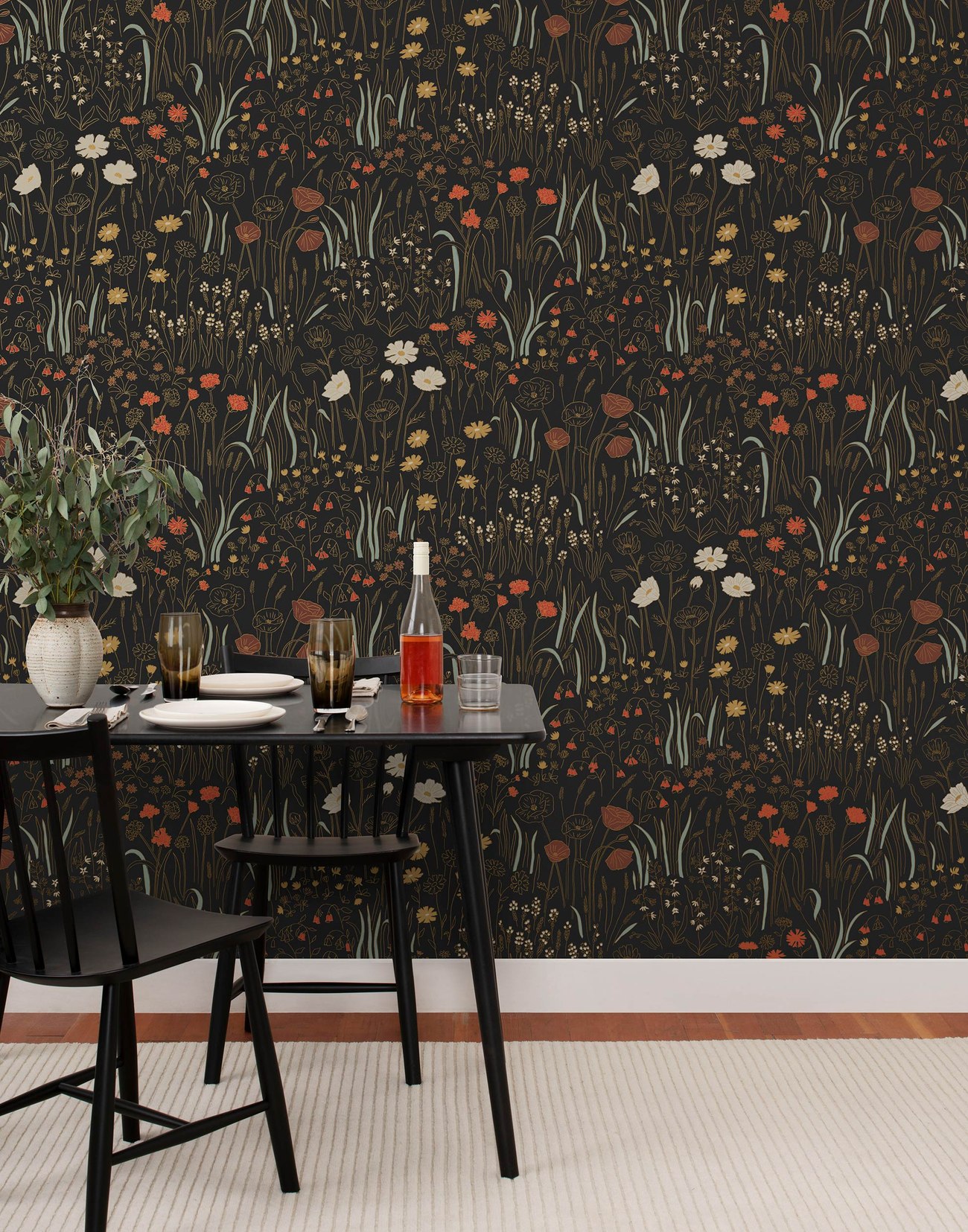
Alpine Garden Multi wallpaper in Ebony in a dining room
Alpine Garden Multi in Ebony. Image courtesy of Hygge & West.

For an independent artist, getting noticed by a brand can feel like a mystery. What makes one pattern stand out? How does a creative team decide which artists to work with?

We invited Ola Supernat, Creative Director at Hygge & West, to share a little of what happens on the other side, from discovering artists and developing collections to understanding what makes a design work beautifully on a wall.

“

Stay true to your artwork, and you may find a brand to collaborate with that loves exactly what you’re doing.

Ola Supernat, Creative Director at Hygge & West

1. How do you typically discover new artists for Hygge & West, and how did you find the last one you worked with?

We like to collaborate with artists whose work we ourselves admire, and we reach out to them when we see a potential fit. That said, our last few collections have been developed with designers we’ve worked with in the past.

2. What catches your attention when you’re looking at an artist’s portfolio?

We look for handcrafted designs with interesting details when viewed up close, as well as considered compositions that create a sense of balance when viewed across an entire wall. We appreciate a distinctive point of view, a curated color palette suited to interiors, and subject matter that brings something new to our existing assortment.
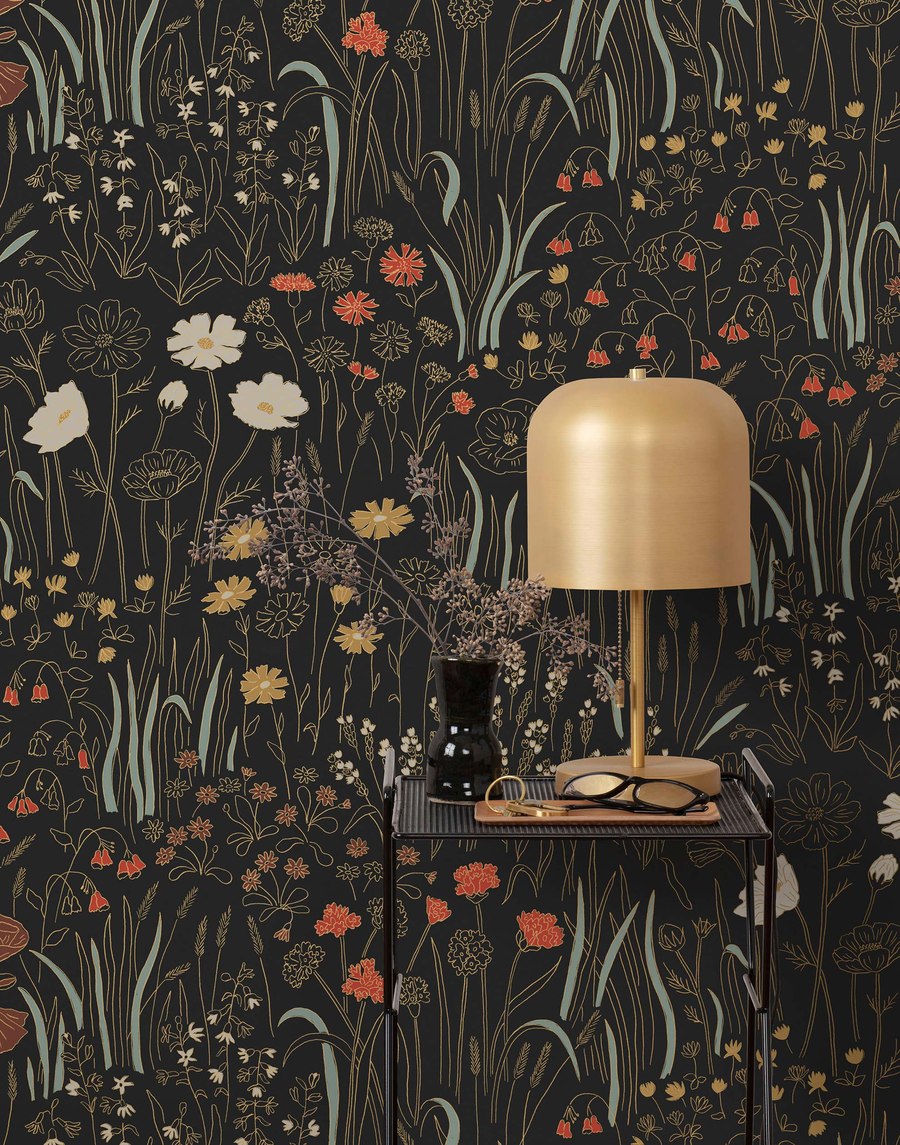
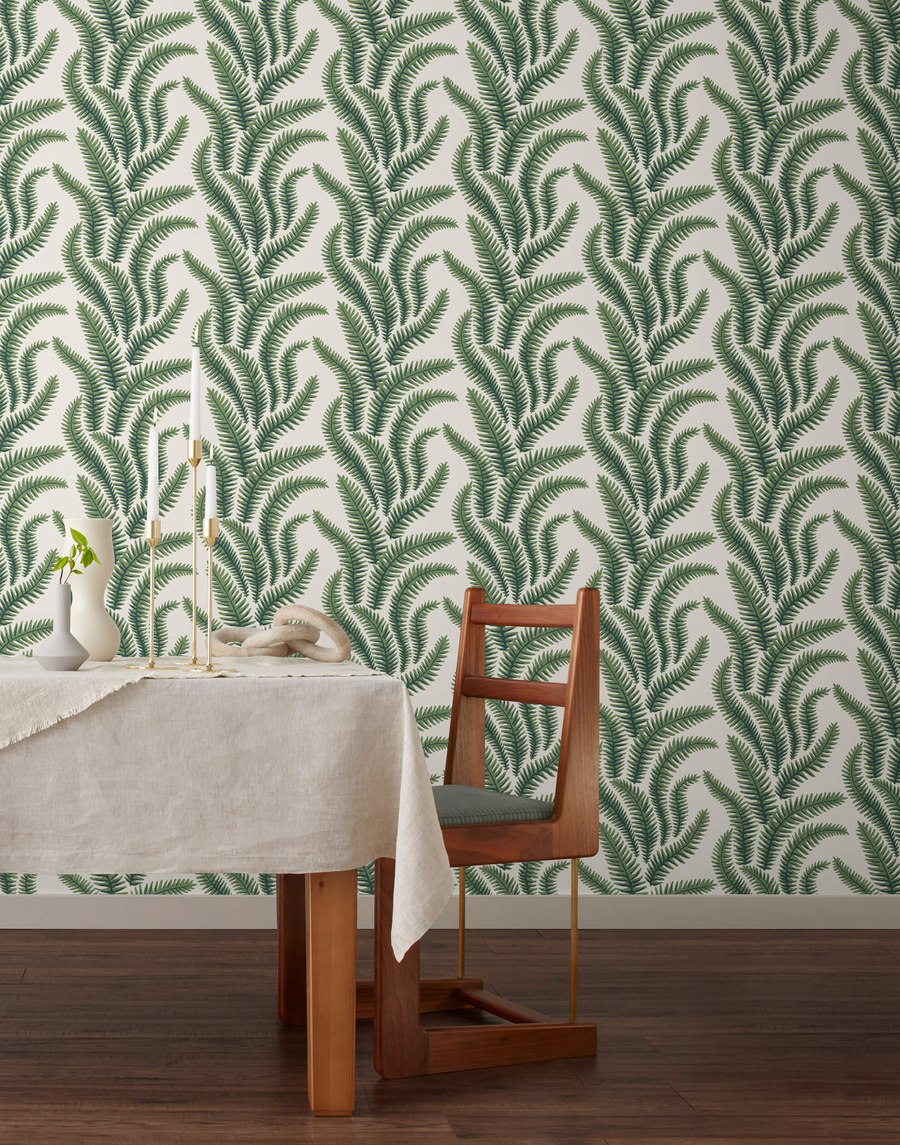
Alpine Garden Multi wallpaper in Ebony, close up Fernery wallpaper in Green behind a dining table
Alpine Garden Multi in Ebony, and Fernery in Green. Images courtesy of Hygge & West.

3. How far ahead do you plan a new collection?

We typically plan our collections at least one year in advance. If the collection is with a designer we’ve worked with in the past, or if we are licensing an existing pattern, the timeline may be shorter. New collaborations or collections created from scratch generally require more lead time for design development and refinement.

4. What’s one piece of advice you’d give an independent artist hoping to work with a brand like yours?

Know your audience. We receive a lot of submissions that, while potentially beautiful in their own right, aren’t quite the right fit for our brand. Before approaching a brand, take the time to understand its aesthetic and ask yourself whether you can genuinely envision your work within its product offering.

It’s also worth considering the intended application. Many submissions seem better suited to fabric than wallpaper, often because of a smaller repeat. If we love a pattern, we’re happy to work with an artist to rework the repeat or develop additional, more distinctive motifs, but it’s always helpful to see designs that have already been thoughtfully considered. It also helps to show your patterns in a room setting so we can envision how they’ll translate to an interior.

Of course, you might check all of these boxes and still not hear from us, and that simply means we may not be the right fit for each other. Stay true to your artwork, and you may find a brand to collaborate with that loves exactly what you’re doing.
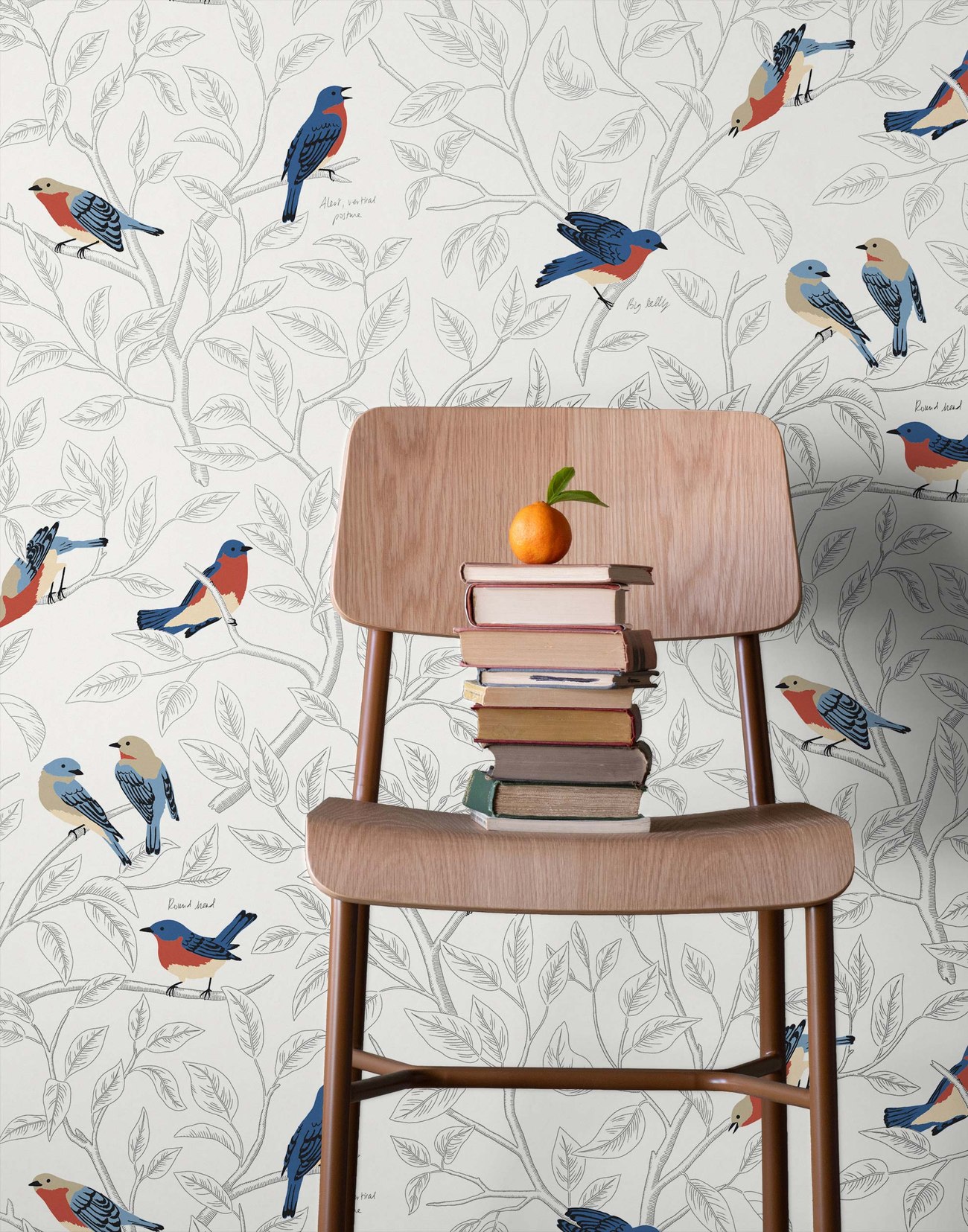
Field Guide wallpaper in White behind a chair with books
Field Guide in White. Image courtesy of Hygge & West.

With thanks to Ola Supernat, Hygge & West.

Wallpaper featured in this story, Alpine Garden and Field Guide, by Ola Supernat.


Journal / Artist Stories

Artist Stories

Patterns That Belong Together

CJ draws from a garden on the West Coast of Canada. She talks about coastal light, the quiet hours before her children wake, and the display table that set everything in motion.

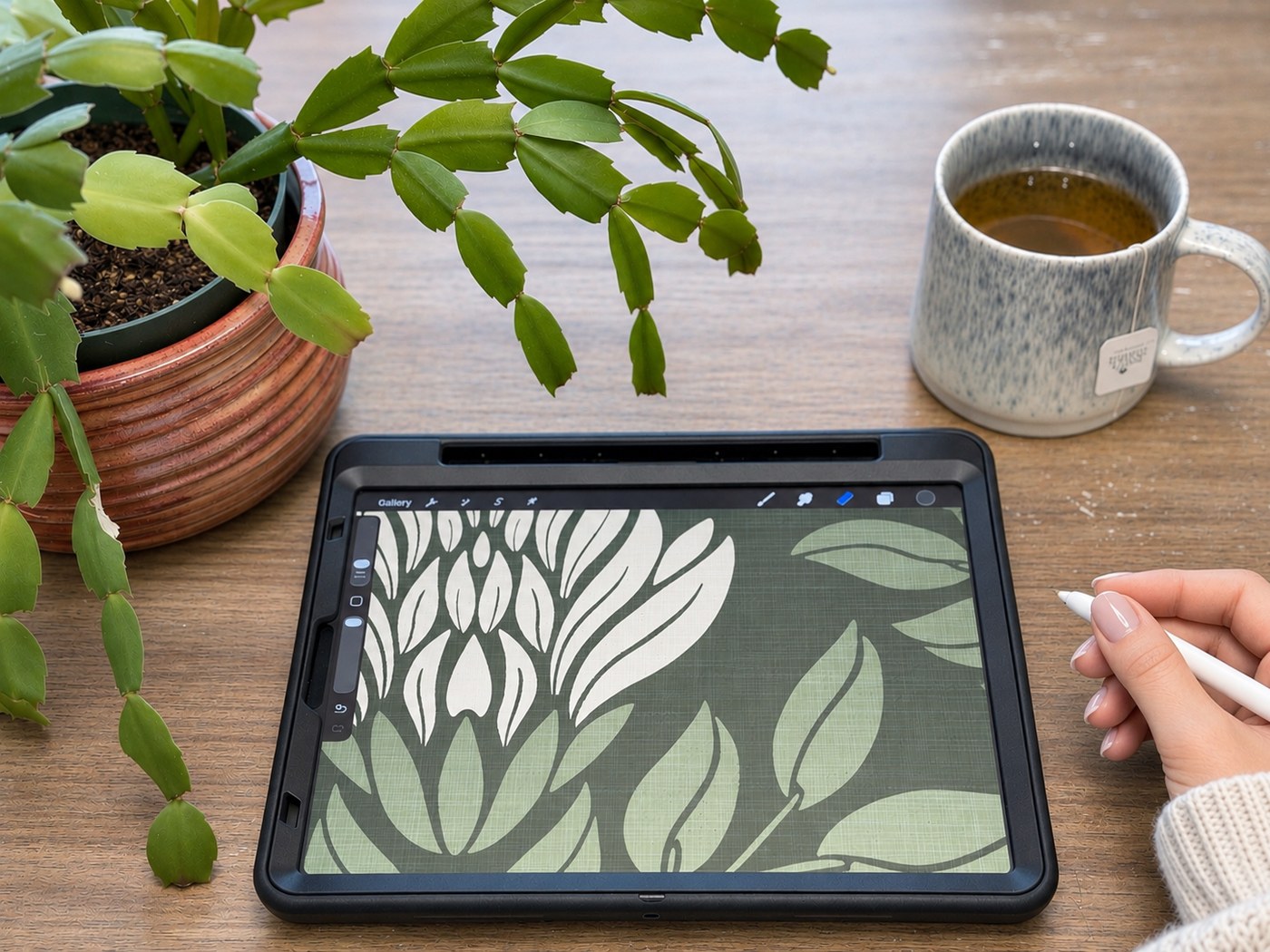
CJ drawing on her iPad
CJ, of Salty Cove Studio.

CJ works as Salty Cove Studio, drawing wallpaper and home patterns from a garden on the West Coast of British Columbia. We asked her five questions.

“

I’d love for someone to walk into a room featuring my patterns and feel as though they can take a breath.

CJ, Salty Cove Studio

1. How would you describe your creative world?

My creative world is a mix of coastal living, gardens, and a love of beautiful patterns. I’ve always been drawn to imperfect, hand-drawn artwork. There’s something about that textured quality that feels more human to me.

Living on the West Coast of British Columbia has naturally influenced my aesthetic: sun-washed blues and whites, but also earthy tones and natural textures.

It wasn’t individual patterns that first drew me to surface pattern design, but collections. I once bought a cloth shopping bag with a floral print on the outside and a wide yellow geometric pattern along the bottom. They were so different, yet together they were just perfect.

Ultimately, I want my work to bring a sense of calm to a space. I’d love for someone to walk into a room featuring my patterns and feel as though they can take a breath.

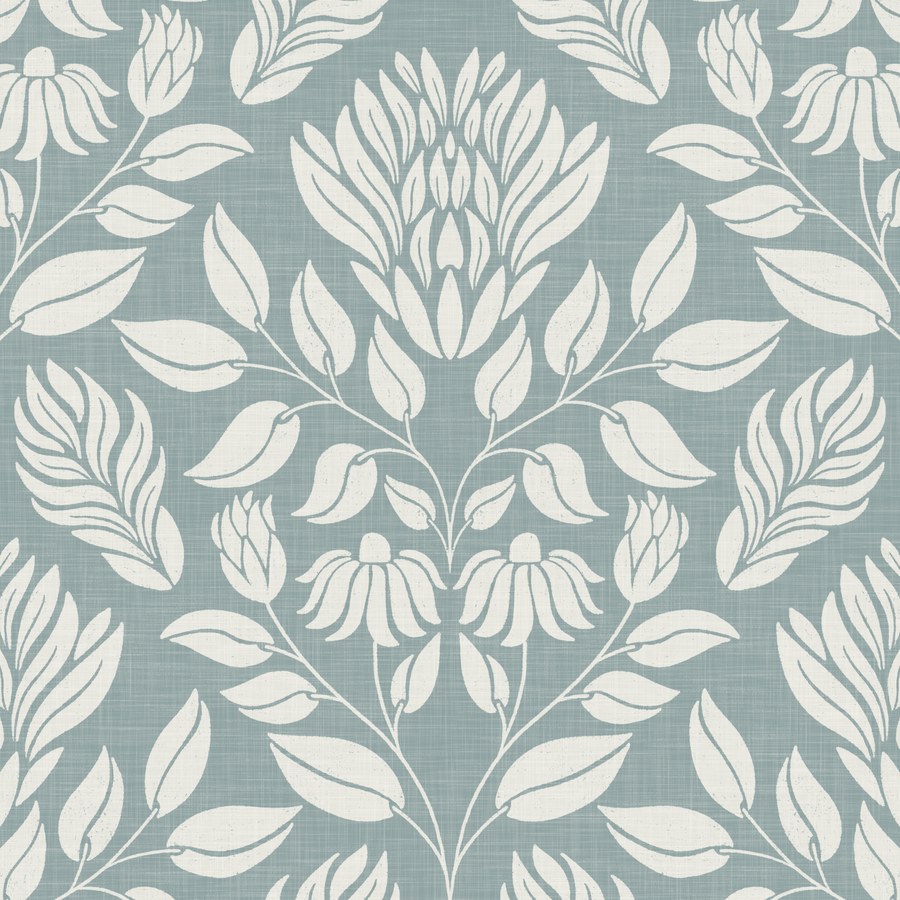
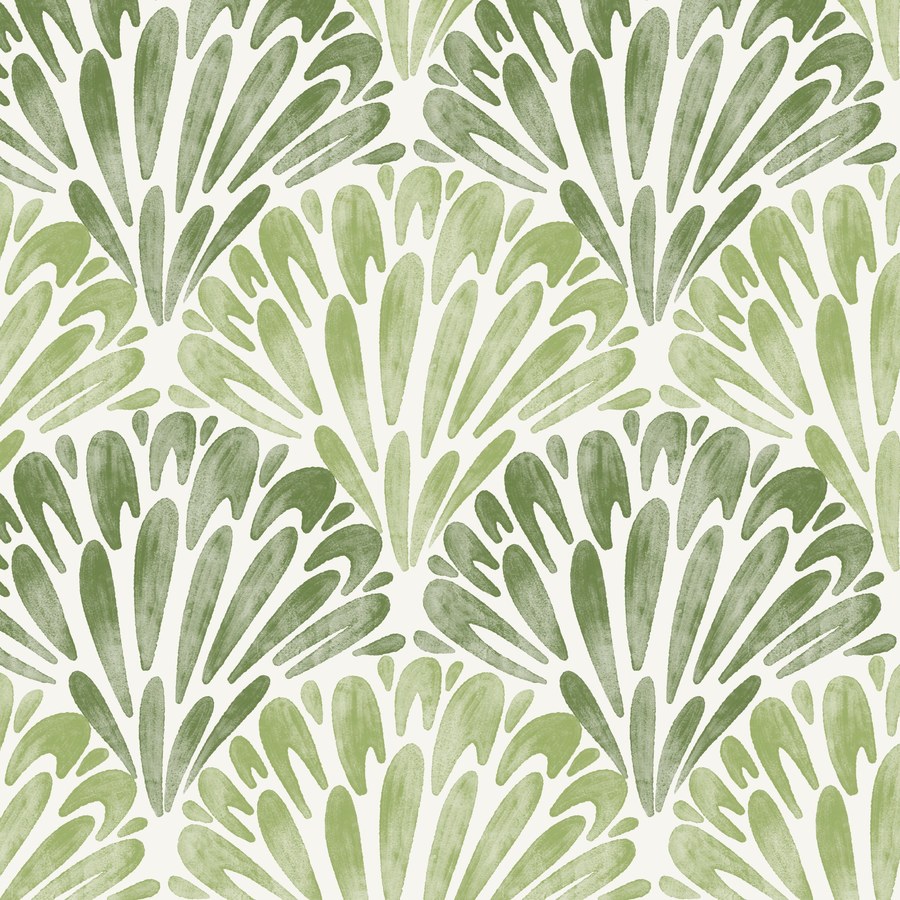
Protea Floral pattern in sea glass Scallop Fan pattern in sage and olive green
Protea Floral, Woven Botanical in Sea Glass, and Scallop Fan, Organic Modern in Sage and Olive Green.

2. What are the little things in everyday life that inspire your work?

Seeing the Chinese Windmill Palms down the street can spark an idea. And when I’m walking along the beach with my kids, learning about things like how our purple sea stars eat, I’m always taking in the shapes, colours and little details of the natural world.

Sometimes it comes from the most unexpected places: the bubbles in an evening candlelit bubble bath when I finally get 20 minutes to myself, or the strawberry plants weaving through the rows in my garden. Even fake plants at the dollar store can catch my attention.

3. Is there a particular piece of artwork that holds a special meaning for you?

A piece that holds special meaning for me is my Mediterranean Folk Floral.

Before creating it, I had mostly been drawing flowers from my imagination rather than from real ones. But one day, right at the beginning of summer, I was out in my garden on one of those first truly warm days when I started noticing the flowers around me in a way I hadn’t before. They had been there all along, but that day I really took the time to look at them.

I started photographing them from all sorts of angles. It felt as though I had captured that little moment of summer in my artwork, the warm sunshine, the gentle breeze and even the smell of freshly cut grass. Rather than simply drawing flowers, I felt like I was drawing a memory.

I even spent much of my honeymoon photographing flowers in the botanical gardens at the spa.

It taught me how much inspiration there is in simply slowing down, looking a little closer and really noticing the beauty that’s already around us.

Rather than simply drawing flowers, I felt like I was drawing a memory.

CJ, Salty Cove Studio

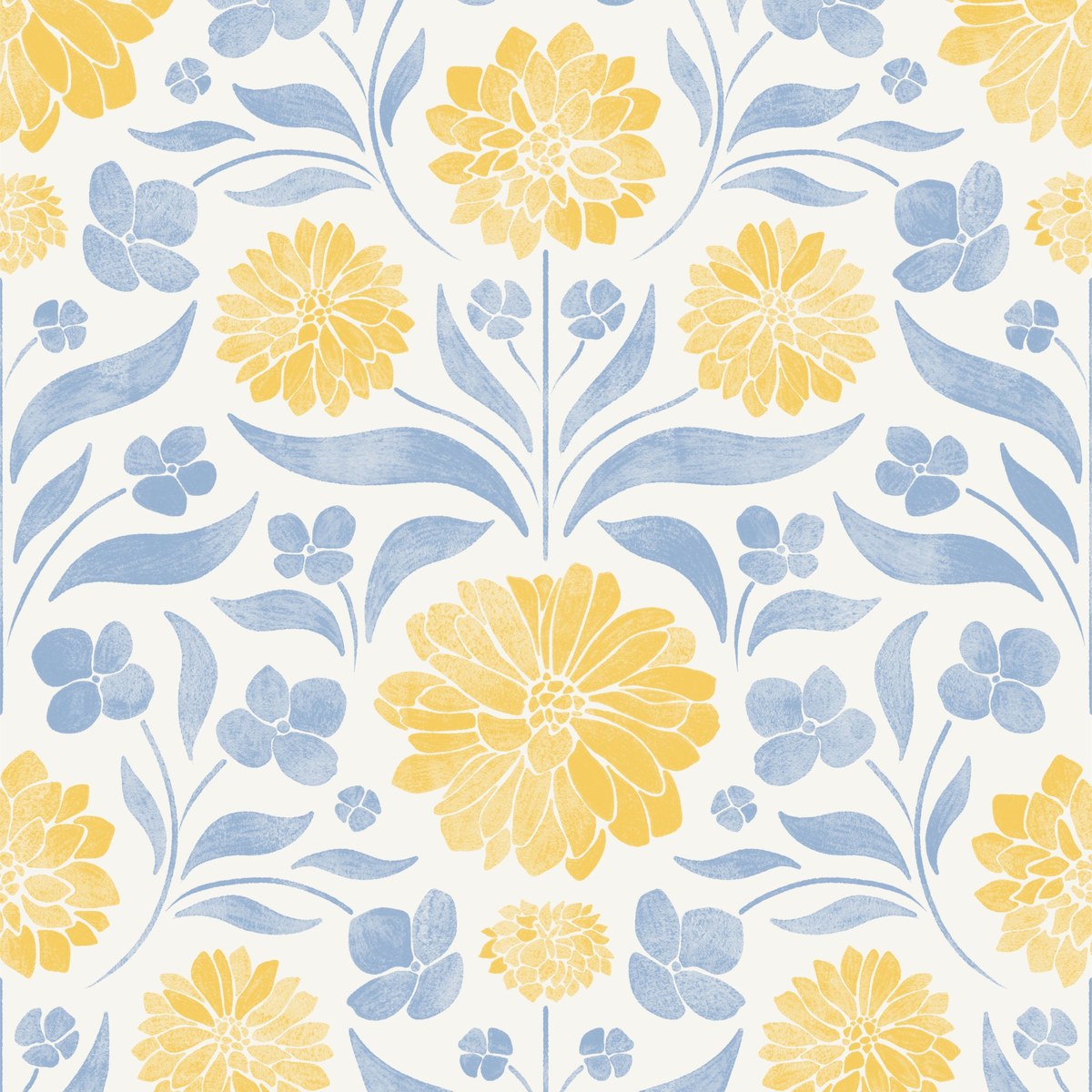
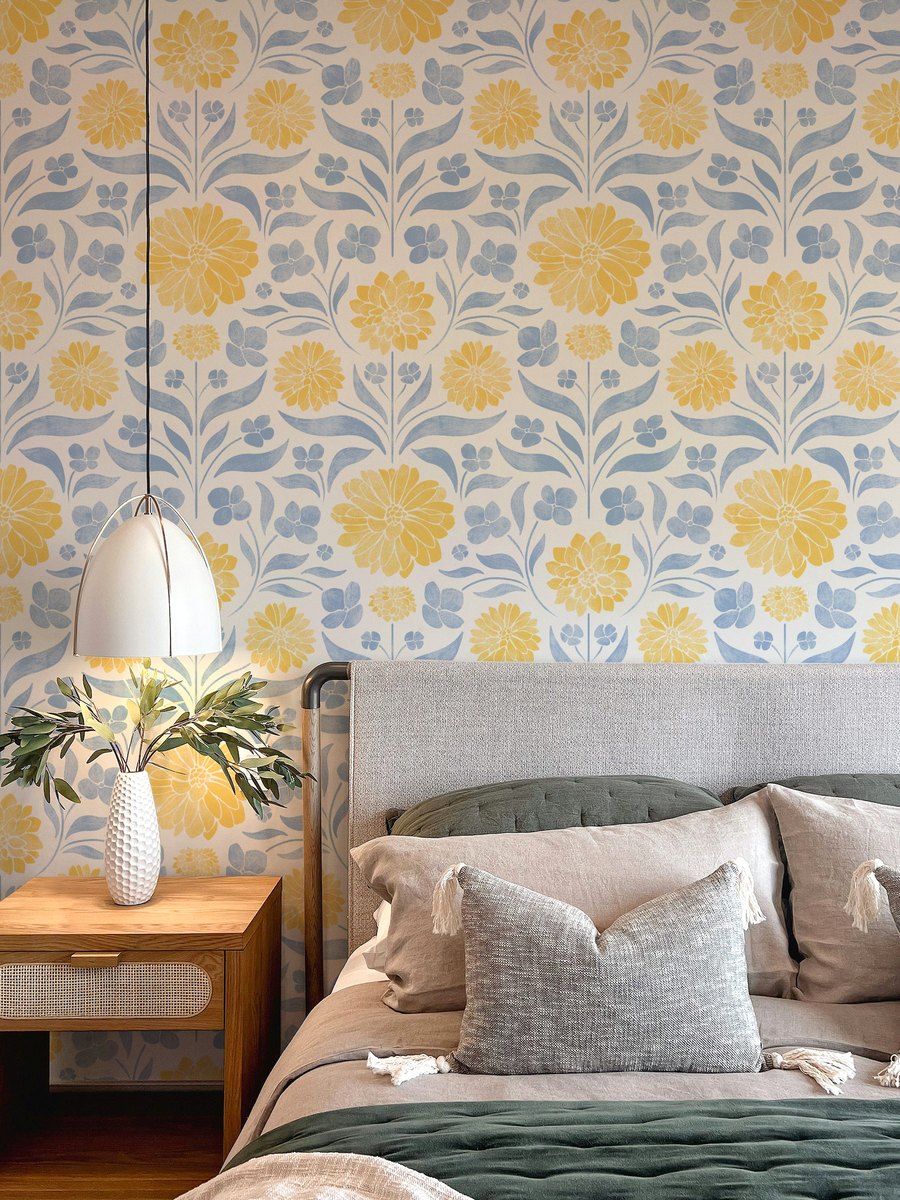
Mediterranean Folk Floral pattern in blue and golden yellow Mediterranean Folk Floral as wallpaper in a bedroom
Mediterranean Folk Floral, in Blue and Golden Yellow, and the same pattern in a room.

4. What’s something about your creative process that people might not expect?

One thing people might not expect is how much I love the quiet early hours. I often get up a few hours before everyone else just to have uninterrupted time to draw. With three of my youngest kids still at home, there’s plenty of noise once the day gets going.

One of my favourite things to listen to is sleep stories on the Calm app. The gentle storytelling and slower pace help me settle into a creative flow.

I also don’t always sketch before I begin. Quite often, I’ll just open Procreate and start drawing, allowing the design to evolve as I go.

An iPad on a desk showing a pattern in progress
A pattern in progress, drawn in Procreate.

I use Jasmine Hnatkova’s pattern templates for almost every pattern I make. They allow me to focus on creating the textured, hand-drawn artwork and experimenting with how the elements come together.

I’m open about sharing the tools I use because I’ve never believed creativity is a competition. The very first pattern I ever created, Riley, was made using one of Jasmine’s templates, and it’s still my best-selling wallpaper design.

5. Is there something you’ve always dreamed of creating but haven’t explored yet?

One of my biggest dreams is to expand into illustration and create artwork for coordinated product collections: stationery, kitchenware, gift wrap.

There’s a story behind why. I was walking into Chapters when I came across a display table filled with lap desks, travel mugs, notebooks and pencil cases. I was completely mesmerized. I wanted every single thing on that table and couldn’t figure out why, until it came to me: even though every item had a different design, they all went together.

I started picking up the different items, wondering whether they were all designed by the same artist or whether somehow a group of artists had magically created all these beautiful patterns that worked so perfectly together. I remember thinking, I want to do this! How do I do this? What is this even called?

I didn’t have a name for it until almost a decade later. I was on Skillshare, learning to draw T-shirt designs for a clothing company I owned, when I stumbled across surface pattern design. Suddenly I had a name for the thing that had captivated me all those years ago, and I had found a wonderful teacher in Cat Coq, who generously shared everything she knew. Eventually I let go of my clothing business and decided to pursue surface pattern design full-time.

I’ve always admired agencies like Jewel Branding and the way they bring artists’ work into the world. I especially love how they celebrate the artists behind the work and share the stories behind their creativity.

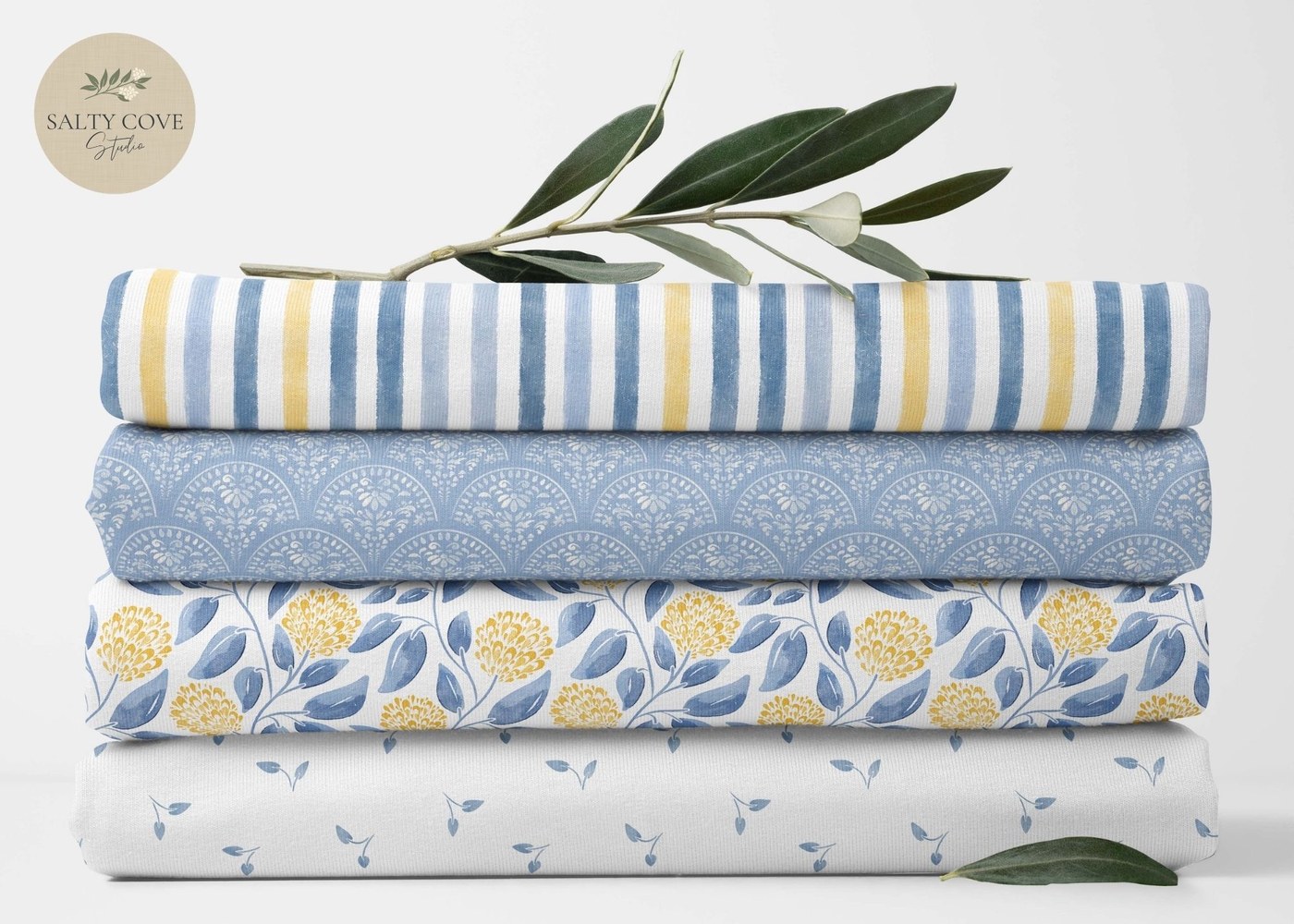
A stack of folded fabrics in coordinating patterns
Patterns made to sit together.

It would be such a full-circle moment to one day walk past a display table filled with products featuring my own designs. And maybe someone will stop, take it all in, and feel that same spark I felt all those years ago.

Salty Cove Studio · saltycovestudio.com · @salty.cove.studio · patterns featured: Isla, Protea Floral, Scallop Fan and Mediterranean Folk Floral · all images courtesy of the artist.


Journal / Beyond the Artwork

Beyond the Artwork

What the Work Teaches You

On curiosity, constraints, and the slow business of becoming an artist.

Nobody warns you, when you start, how much of an artistic life happens away from the drawing itself. There are the habits you build and the things you start noticing. There are the decisions you second-guess at 2 a.m. And there’s the slow, almost invisible shift in how you see.

Every path is different. But talk to enough artists and the same lessons keep coming up.

The ordinary is where the ideas are

Big ideas rarely come from big experiences. They come from the faded green of a bakery awning next to a pink door, the way ivy climbs a wall you pass every day, or a chipped enamel tin at a flea market with a border you can’t stop thinking about.

Trends can show you what’s happening in the world. Your own observations are what make the work yours. The more you look, the more you have to draw from.

The limit is often the idea

A budget that only allows two colors. A pattern that needs to work across different products. A client who wants something new, but not too new. At first, every limit feels like a door closing.

Then you start working with it instead of against it. Two colors push you to play with contrast. Designing for different products makes you think about scale and versatility. A careful client makes you find the fresh idea hiding inside the familiar one.

Total freedom sounds ideal, but it rarely tells you where to start. A limit does.

Your style is not a cage

A recognizable style is valuable, and it’s also easy to get stuck in. Keep the door open. If you live in Procreate, try gouache. If you always draw flowers, draw animals. Let in an influence from somewhere unexpected.

Not every experiment has to become a collection. Some exist only to teach you something. A few turn out, years later, to be where everything started.

“Becoming an artist isn’t something you finish. It’s something you keep doing.”

The work will have a life you can’t see

A drawing doesn’t stay on a screen. It becomes a tea towel used in someone’s kitchen, a birthday card that brightens someone’s day, or a wall a child stares at before falling asleep.

Thinking about that doesn’t make the work less personal. If anything, it reminds you that what you make will become part of someone else’s ordinary days.

Don’t do it alone

So much of this work happens in silence: long hours at the desk, and choices no one sees you make or doubt.

That’s why the conversations matter so much. It’s the artist who shows you the trick that saves you hours of work, the designer who’s been doing this ten years longer than you and tells you what she charges, or the friend who looks at your portfolio for thirty seconds and says the thing you couldn’t see in three months.

You can learn technique on your own. Perspective almost always comes from someone else.

You’re allowed to change

The work you were proud of five years ago may feel like a stranger’s now. That isn’t failure. It’s proof you kept moving.

No career is built on one perfect collection or one defining style. It’s built from thousands of small decisions, failed experiments, good conversations and quiet discoveries.

Becoming an artist isn’t something you finish. It’s something you keep doing.

→ Discover the artists shaping their own path on The New Folium


Journal / Perspectives

Perspectives

Why Discovering Independent Artists Should Be Easier

Our own thoughts and observations from behind The New Folium.

The internet made it easy for artists to publish their work. It never made it easy for anyone to find them. Being visible and being discovered turn out to be two very different things.

An artist finishes a collection and posts it. It reaches the people who already follow her. Somewhere else, an art director is an hour into looking for exactly that kind of work, on a platform that shows her what performed well last week rather than what fits the brief on her desk.

Both of them are doing everything right. They never meet.

So the artist starts researching companies, finding names, writing emails that mostly go unanswered. The art director goes back to the artists she already knows, because that is faster than looking. Neither of those is a failure of talent. It is a failure of introduction.

Introductions are an unglamorous thing to care about. They don’t look like creativity, and nobody puts them in a portfolio. But almost every artist we have spoken to can name the one that changed things, a name passed along, a portfolio that landed on the right desk in the right week.

That is the part we decided to work on.